Home / Avoiding Glare on Shiny Counters
Avoiding Glare on Shiny Counters
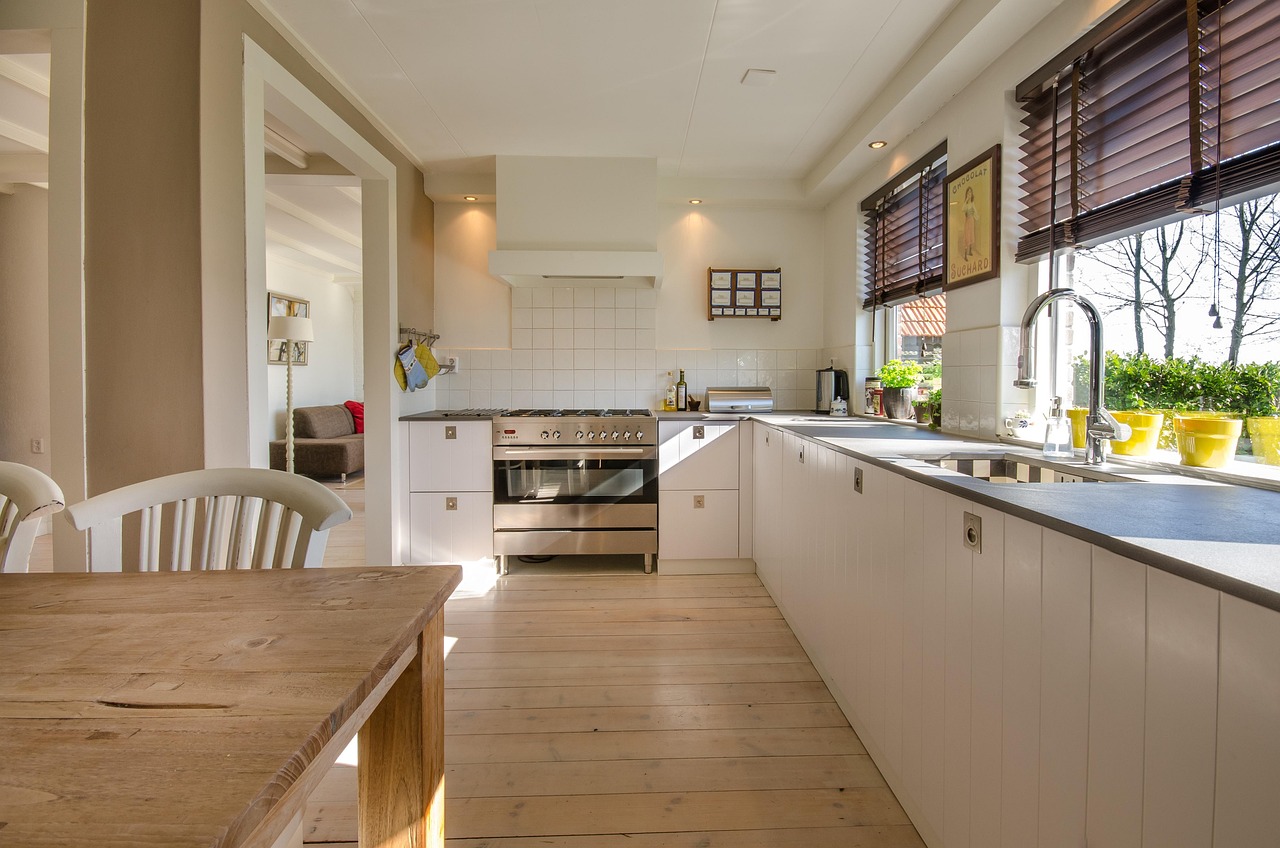
A polished quartz or honed stone counter can look flawless in a showroom and then throw a bright stripe of reflected light into your eyes the first evening the new lights are switched on. Glare on a shiny counter is not a defect in the surface or the bulb. It is geometry: a light source, a reflective plane and a pair of eyes all lined up at the wrong angle. Moving any one of those three changes the result.
How the reflection actually forms
A glossy surface acts like a mirror at a shallow angle. Light striking the counter leaves it at the same angle it arrived, the way a ball bounces off a floor. If the reflected path runs into the eye of someone standing at the counter, they see the light source itself as a hot spot on the surface. A matte surface scatters the light in every direction, which hides the source and softens the image.
So the questions to ask are about angles. Where is the fixture relative to the front edge of the counter? How high is it? Where do eyes sit when someone chops, reads a recipe or sits on a stool? Answer those, and the cause of a stripe of glare is usually plain.
Fixture position under the cabinet
For under-cabinet lighting, the key variable is how far the fixture sits from the wall. A strip mounted at the back, hard against the wall, shines forward across the counter at a shallow angle and creates a long band of reflection that runs toward a person standing in front. The same strip moved toward the front edge of the cabinet, behind a small face rail, throws light down and toward the wall. The reflection then bounces toward the backsplash, away from the viewer.
Many people find the best position is somewhere in the front third of the cabinet depth. A hidden fixture behind a lip at the front edge lights the counter and the work zone without exposing the source. A shallow light rail, a strip of wood along the underside, serves this purpose and also conceals the strip from anyone standing or sitting.
When a strip has to sit near the back because of a shallow cabinet, the choice of diffuser becomes more important, which is the next point.
Diffusers, lenses and finish
A diffuser is a frosted cover that spreads the light from tiny diodes into a continuous glow. Without one, an LED strip on a shiny counter shows up as a row of bright dots, each reflected separately. With a diffuser, the dots blur into a uniform band, and the reflection looks much softer.
- A frosted or opal channel cover is the most common fix and works with strips of nearly any type.
- A louvered or baffled lens controls the angle of the beam and cuts side glare, at the cost of some brightness.
- A narrow beam lens aims light in a tight cone, which can help when the counter is shallow and the wall needs to stay dim.
- A wide beam lens fills a deep counter but increases the reflected area.
A strip with a high density of tiny diodes also reads smoother than a strip with widely spaced ones, and many fixtures are described by how many diodes sit in each length. Dense spacing combined with a diffuser can make a bare channel almost invisible in reflection.
Surface finish matters as much as the light
A polished counter reflects the most, a honed or satin counter much less, and a textured or leathered surface the least. When glare is a recurring complaint, the counter itself may be part of the cause. Choosing a honed finish at the time of selection is cheaper than correcting the lighting afterward. If the counter is already installed, a matte sealer is rarely suitable for engineered surfaces, so lighting adjustments are the practical route.
The backsplash adds to the picture. A glossy tile backsplash can bounce the light a second time, bringing glare back to eye level. A matte or textured backsplash tile absorbs some of that, while a large format glass panel can bounce light across the whole wall. Seeing the backsplash and the counter as a pair helps predict where the bright streaks will appear.
Overhead lights and the stool problem
Recessed lights in the ceiling are another source of reflection, especially over an island where people sit. A fixture directly above a polished island top can create a bright circle that moves as a person shifts. A baffle trim with a deep inner cone hides the lamp from most angles, and a wider spacing between fixtures reduces the number of reflections. Pendants over an island can also glare if their shades are clear glass with exposed bulbs; a frosted shade or a lower output bulb eases the problem.
Anyone sitting on a stool has eyes lower than someone standing, which changes the reflection angle. Test the lighting from both positions. A stripe that is invisible while standing may appear when seated, and it is much easier to adjust before the wiring is closed up.
Color temperature and brightness
Glare is partly a matter of contrast. A very bright strip in a dim kitchen looks harsher than the same strip in a well lit room, because the eye has adapted to the dark. Raising the general light level, or putting the under-cabinet strip on a dimmer, reduces the contrast and softens the effect. A warmer color temperature also feels less piercing on a glossy surface than a very cool white, though that is a matter of taste and consistency with the other fixtures.
A simple test with a temporary setup
Before committing to a position, tape a strip or a small light along the cabinet underside and sit, stand and lean as you would while working. Move the light forward and backward by an inch or two at a time and watch the counter. Look at the reflection of the light on the surface, then at the backsplash, then at the faucet. A temporary test costs nothing and shows what a drawing cannot.
Try these test positions:
- At the back edge of the cabinet, against the wall.
- In the middle of the cabinet depth.
- At the front edge, behind a small rail.
The difference between the first and third is often striking, and it explains why a front-mounted strip is so often recommended.
Other small fixes after installation
- Add a diffuser strip to an existing bare channel without replacing the strip itself.
- Install a small face rail or trim piece to hide the light from standing viewers.
- Lower the brightness with a compatible dimmer.
- Switch to a warmer or lower output lamp in pendants.
- Place a small mat, cutting board or tray in the worst spot, which is a temporary patch rather than a design solution.
Putting it together
Glare is solved by thinking in angles. Keep the light source out of the line between the counter and the eyes, soften it with a diffuser, choose a finish that reflects less, and test from the positions people actually use. A strip that lights the counter evenly without ever announcing itself is the sign that all of those pieces agree. A kitchen with that quality of light is easier to cook in, easier to clean, and easier on the eyes after a long evening.